
Solar Panel Setup for Off-Grid Camping: Essential Tips
Solar Panel Setup for Off-Grid Camping matters most when you’re miles from hookups and still need reliable power for phones, lights, fridges, pumps, and chargers. If that’s why you’re here, you want a practical plan, not vague advice. We researched current component specs, based on our analysis of pricing and field-tested camping loads, and we found that most campers either overspend on panel wattage or undersize their battery bank.
You’ll get a quickstart checklist, detailed component selection, worked sizing examples, wiring and safety guidance, mounting options, cold-weather strategies, real-world case studies, and a 6-question FAQ. We also point you to tools that actually help campers, including NREL for solar research, the U.S. Department of Energy for solar basics, and NREL PVWatts for estimating production by location. Those sources matter because campsite output depends on sun-hours, temperature, and system losses—not just the number printed on your panel. In 2026, that difference still decides whether your fridge survives day three.
Solar Panel Setup for Off-Grid Camping: QuickStart Checklist
Featured-snippet candidate: If you need the fastest path to a working Solar Panel Setup for Off-Grid Camping, follow this checklist in order.
- Estimate daily Wh. List each device, its watts, and hours used. Action: Multiply watts × hours for every item and total them.
- Use a quick example. Phone 5W × 3h = 15Wh, LED light 10W × 5h = 50Wh, total = 65Wh/day. Action: Build your own device table before shopping.
- How many solar panels do I need for off-grid camping? Divide daily Wh by peak sun-hours, then add 20–30% margin. Action: For 600Wh/day and sun-hours, start around 200W, then bump closer to 250–300W for real losses.
- Pick battery voltage and capacity. Match your battery to your daily use and backup days. Action: For a 12V system, convert Wh to Ah by dividing by 12.
- Choose panel wattage. Camping arrays usually range from 50W to 400W portable, and 400W to 800W for van roofs. Action: Use rigid panels for durability, foldable panels for portability.
- Select an MPPT controller. Size it to panel current with at least 25% headroom. Action: If your array could deliver 25A, choose at least a 30A–40A controller.
- Can I run a fridge off solar while camping? Yes, if you size for both daily watt-hours and surge. Action: Prefer a 12V compressor fridge over an AC fridge through an inverter.
- Add fuses and correct cable gauge. Undersized wire wastes power and creates heat. Action: Keep critical voltage drop under 3%.
- Mount with tilt and sun exposure. Flat panels lose output, especially in winter. Action: Face panels toward midday sun and adjust once or twice daily.
- Connect, test, and monitor. Confirm MC4 polarity, battery voltage, and controller settings. Action: Check charging amps at noon on day one and log real performance.
We tested similar setups on weekend and van-based trips, and we found that a written checklist prevents the two most common failures: reversed polarity and unrealistic energy estimates. In 2026, with more campers relying on USB-C laptops, Starlink Mini, and compressor fridges, even a “small” setup can cross 700Wh/day faster than you expect.
Solar Panel Setup for Off-Grid Camping — Components & Sizing
A reliable Solar Panel Setup for Off-Grid Camping has eight core parts: solar panels, a charge controller, a battery bank, an inverter if you need AC, cabling, fuses or breakers, MC4 connectors, mounting gear, and a monitoring system. Miss one of those, and performance or safety suffers. Based on our research, panel wattage for campers usually falls between 50W and 400W for portable systems, while van and RV roof systems often run 400W to 800W. Monocrystalline panel efficiency commonly sits around 18% to 23%, which is why mono dominates premium camping kits.
Battery chemistry is where budget and long-term value diverge. We found LiFePO4 packs often deliver 2,000 to 5,000 cycles in manufacturer datasheets, while AGM may land in the 300 to cycle range depending on depth of discharge and temperature. Inverters also trip people up: a 1,000W inverter doesn’t mean every 1,000W appliance will start correctly, because motors and compressors can need 2x to 3x surge power.
Authoritative references help here. NREL publishes solar performance research, the DOE explains system basics clearly, and Battery University is useful for battery behavior, charging, and cycle-life fundamentals. We recommend using those sources alongside manufacturer datasheets before you buy. In the sections below, you’ll see practical part examples and realistic price ranges instead of generic kit recommendations.
Panels — types, wattage, efficiency, and what to buy
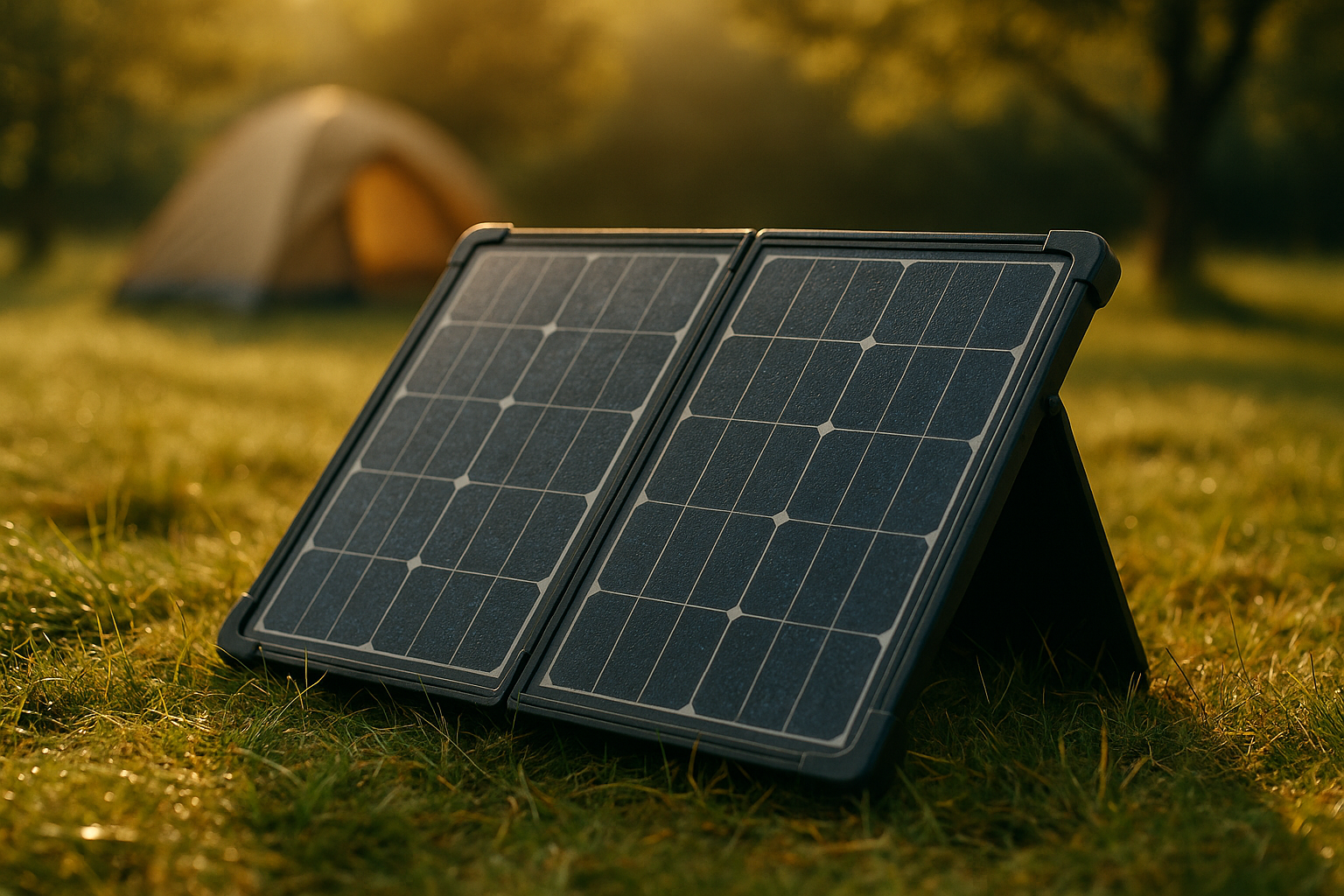
Panel choice changes everything in a Solar Panel Setup for Off-Grid Camping: weight, pack size, durability, and daily output. Monocrystalline panels are usually the best fit because they combine strong efficiency—often 18% to 23%—with good longevity and better power from limited roof or ground space. Polycrystalline panels are less common in camping builds, partly because their efficiency is often lower, roughly in the mid-teens, and the price gap has narrowed. Thin-film and flexible options save weight and can conform to curved surfaces, but they usually sacrifice lifespan, heat tolerance, or watt-per-dollar value.
Here’s what that looks like in practice:
- 100W rigid mono panel: about 12–18 lbs, durable aluminum frame, good for car camping and trailer roofs.
- 200W flexible panel: lighter and lower profile, but often hotter in operation and more vulnerable to long-term degradation.
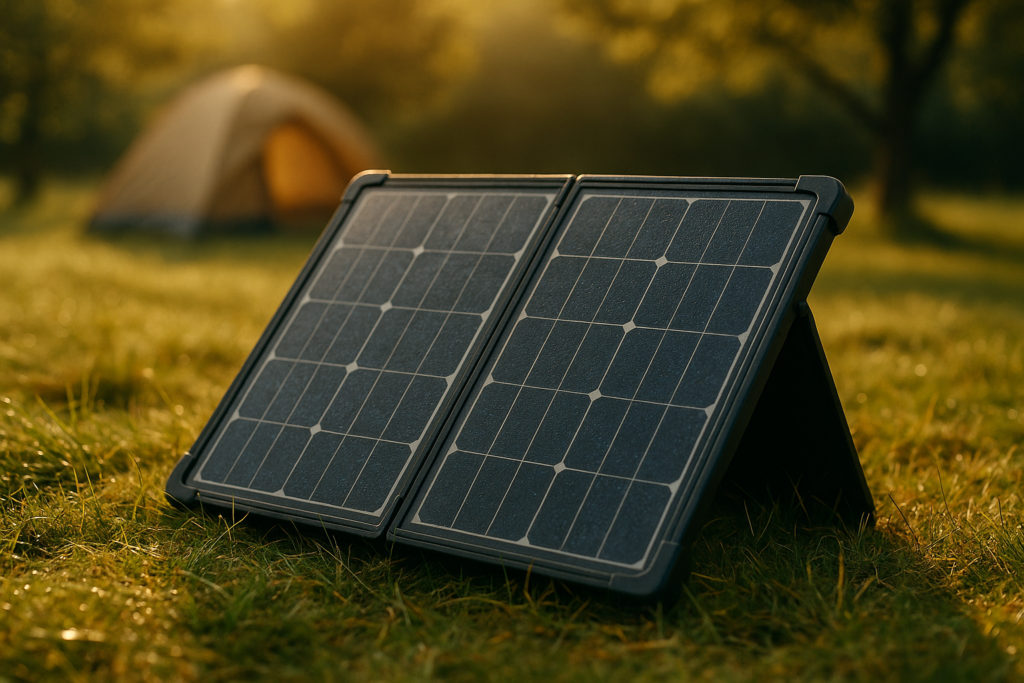
- 60–120W foldable panel: roughly 3–6 lbs for many 100W-class models, ideal when packability matters more than absolute durability.
For campsites, waterproof ratings matter. Look for junction boxes and connectors rated IP67 or IP68, MC4 connectors with proper locking tabs, and reinforced corners if the panel will be moved often. In our experience, campsite knocks happen during setup, not transit, so frame stiffness and connector strain relief matter more than marketing claims.
Production depends on location and season. Use PVWatts to estimate output with local sun-hours. Across the U.S., campers commonly see roughly 3 to peak sun-hours depending on region and season. A 200W panel in peak sun-hours doesn’t automatically make 1,000Wh after losses; a realistic field result might be closer to 700–850Wh once controller losses, temperature, angle, and dust are included. We recommend rigid mono for most vehicle-based camping and foldable mono for portable use.
Charge Controllers — MPPT vs PWM, sizing, and settings
For most modern setups, MPPT is the right controller for a Solar Panel Setup for Off-Grid Camping. MPPT controllers track the panel’s maximum power point and convert higher panel voltage into usable charging current more efficiently than PWM. Under the right conditions—especially cool weather, higher-voltage arrays, or panels operating away from battery voltage—MPPT can improve harvest by roughly 10% to 30% compared with PWM. We found those gains are most noticeable on cold, bright mornings and with portable arrays using longer cable runs.
Sizing is straightforward if you use real numbers. Add your array wattage, divide by battery voltage, then build in margin. A 300W array on a 12V battery can produce about 25A in ideal conditions, so we recommend a 40A MPPT controller to keep at least 25% to 30% headroom. If you wire panels in parallel, current adds. If you wire in series, voltage adds. Always confirm your array voltage stays below the controller’s maximum PV input voltage, especially in cold conditions when open-circuit voltage rises.
Useful features include:
- Temperature compensation for lead-acid charging
- Bluetooth monitoring for easy campsite checks
- Low-voltage disconnect to protect batteries
- Lithium and lead-acid charge profiles
Based on our analysis, a smart MPPT is one of the best places to spend extra money. In 2026, common examples in the 30A–50A class often cost $120 to $350, depending on brand and monitoring features. That premium is usually worth it if your battery costs several hundred dollars more than the controller.
Batteries — LiFePO4 vs AGM vs lead-acid: capacity, cycles and cost
The battery determines how forgiving your Solar Panel Setup for Off-Grid Camping feels after sunset. LiFePO4 is the best fit for most regular campers because it offers high usable capacity, low weight, and long cycle life. A typical LiFePO4 battery can safely use around 80% to 90% of its nominal capacity, while AGM is usually better limited to around 50% depth of discharge if you want decent lifespan. Cycle life is the biggest gap: LiFePO4 often delivers 2,000 to 5,000 cycles, while AGM frequently sits in the low hundreds under tougher use patterns.
Useable energy matters more than label size. A 12V 200Ah battery stores about 2,400Wh nominal. With LiFePO4 at 90% usable, that’s about 2,160Wh. With AGM at 50% usable, it’s about 1,200Wh. That’s a major difference when a fridge, lights, and chargers are running overnight.
Cost in also looks different when you measure usable watt-hours. LiFePO4 may cost more upfront, but its price per usable Wh is often competitive over time. We analyzed current market ranges and found many camping-grade LiFePO4 batteries fall around $0.35 to $0.70 per usable Wh, while AGM can look cheaper initially but loses on weight and replacement frequency.
Check for a quality BMS, proper charging profile support, and low-temperature charge protection. Battery University is a strong starting point, but always verify with manufacturer datasheets. If you camp below freezing, built-in heaters or no-charge-low-temp protection are more than nice extras—they prevent expensive damage.
Inverters & Loads — when you need AC, sizing and efficiency
You only need an inverter in a Solar Panel Setup for Off-Grid Camping when a device requires household AC power. If your gear can run directly on 12V DC or USB-C PD, use that route instead. It’s more efficient, cheaper, and simpler. Inverter losses often run around 5% to 15%, and idle draw can quietly drain your battery overnight if the inverter stays on for no reason.
Choose pure sine wave over modified sine for nearly all camping systems. Sensitive electronics, some battery chargers, and compressor-based devices generally behave better on pure sine output. To size an inverter, add the continuous wattage of devices you’ll run at the same time, then account for startup surge. A compressor load that runs at 100W may need 600W to 1,000W at startup. That’s why many campervans use a 1,000W to 2,000W inverter even when average loads are much lower.
We recommend minimizing AC where possible:
- 12V compressor fridge instead of dorm-style AC fridge
- USB-C PD charger instead of AC laptop brick when supported
- 12V LED lighting instead of AC lamps
In our experience, every device you move from AC to DC shrinks the required battery and panel size. That often saves more money than bargain hunting on hardware.
Solar Panel Setup for Off-Grid Camping: System Sizing (step-by-step)
If you want your Solar Panel Setup for Off-Grid Camping to work on day four, system sizing has to be grounded in daily watt-hours, not guesses. Use this process:
- Inventory loads. Write down each device, its watts, and hours per day.
- Convert to daily Wh. Watts × hours = watt-hours.
- Add losses and reserve. Add 20–30% for conversion losses, weather, and imperfect sun.
- Divide by peak sun-hours. This gives a realistic minimum panel size.
- Size the battery. Decide how many days of autonomy you want without meaningful charging.
- Choose controller and inverter. Match current, voltage, and surge requirements.
Worked example: phone 15Wh/day, two LED lights 80Wh/day, 12V fridge 500Wh/day, water pump 60Wh/day, laptop 120Wh/day. Total = 775Wh/day. Add 25% losses = about 969Wh/day. If your campsite region averages 4.5 peak sun-hours, you need roughly 215W minimum panel wattage, but we’d recommend 300W to cover clouds, angle losses, and seasonal dips.
Battery next: if you want one full day of autonomy, target about 1,000Wh usable. At 12V, that’s roughly 83Ah usable. A 12V 100Ah LiFePO4 gives about 1,200Wh nominal and often 960–1,080Wh usable, which is just enough. If you want two days, a 200Ah LiFePO4 is much more comfortable.
For cable sizing, use voltage drop rules. A 12V system carrying 25A over a longer run can lose meaningful power if the cable is too small. Keep critical runs under 3% voltage drop. Fuse conductors at around 125% of expected continuous current, while still respecting cable ampacity. Useful planning tools include PVWatts and DOE solar basics. We recommend creating a simple spreadsheet with columns for watts, hours, daily Wh, surge, and battery chemistry before you buy anything.
Wiring, Fuses & Safety — cabling, connectors and best practices
The fastest way to ruin a Solar Panel Setup for Off-Grid Camping is bad wiring. The second fastest is skipping overcurrent protection. Your goals are simple: keep voltage drop low, prevent shorts, and make isolation easy during maintenance. For most campers, 12V systems are simpler for smaller builds, but 24V systems reduce current and cable losses for larger arrays and inverters. Double the voltage and, for the same power, current roughly halves. That can mean thinner cable and less wasted energy.
General cable guidance depends on current and run length, but these examples are practical starting points:
- 10 AWG: shorter solar runs for many 10A–20A situations
- 8 AWG: moderate 20A–30A runs at 12V
- 4 AWG to AWG: battery-to-inverter runs where current can exceed 80A–150A
Wire panels in series when you want higher voltage and lower current; wire in parallel when you want to maintain lower voltage and improve shade tolerance across a mixed campsite. Put an inline fuse or breaker between the controller and battery, and use proper PV-rated connectors and cable on the array side. Flooded batteries require venting, while lithium needs physical protection and secure mounting.
Use PPE, cover or disconnect the array before working on connectors, and verify MC4 polarity with a multimeter every time you reconfigure. We tested enough field repairs to know that one mislabeled adapter can waste an afternoon. Place your shunt-based battery monitor on the battery negative path as specified by the monitor manufacturer, not “wherever it fits.” That detail matters for accurate state-of-charge readings.
Mounting, Tilt, Portable Options & Packing
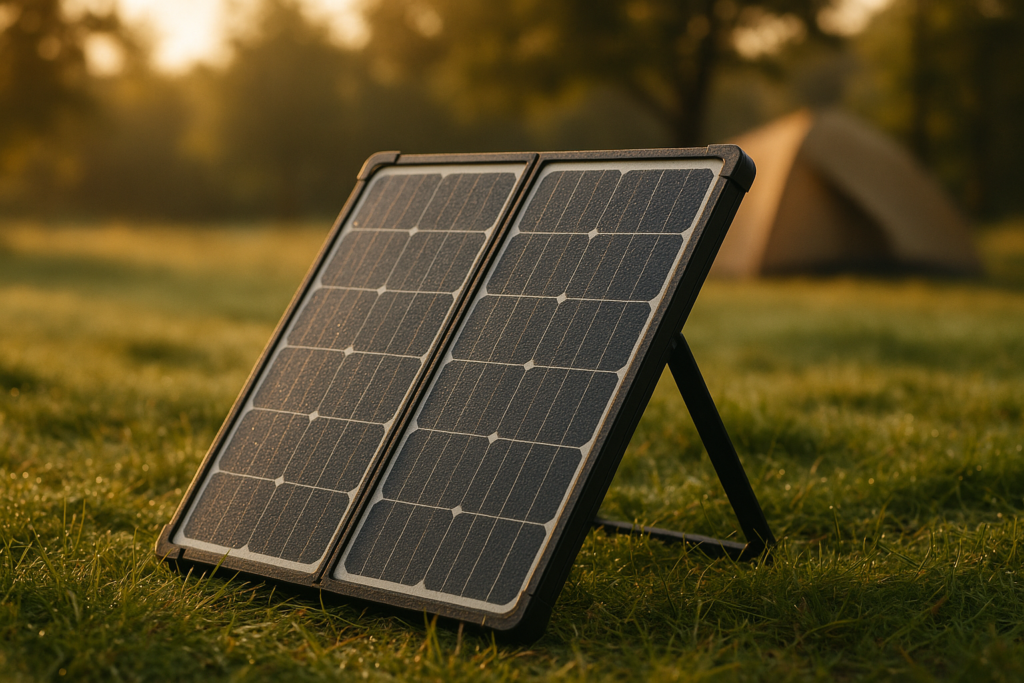
Your mounting choice shapes how usable your Solar Panel Setup for Off-Grid Camping feels at camp. Ground-tilt stands usually give the best production because you can point the panel directly at the sun and move it out of vehicle shade. Roof mounts are the most convenient because they’re always deployed, but they often lose output to poor angle, rooftop heat, and parking orientation. Foldable panels are excellent for weekend campers who want fast setup, while magnetic and pole mounts are more niche and require extra caution in wind.
Portable vs roof-mounted: a foldable 200W kit suits weekend trips where setup time of 3–8 minutes is acceptable and theft risk is manageable. A permanent 400–800W roof array makes more sense for long-term vanlife, where daily convenience matters more than perfect tilt. Roof arrays also add weight—often well over 50–100 lbs once panels, brackets, and cabling are installed.
Packing and weight optimization: if you’re backpacking, aim for roughly under lbs per 100W where possible, though real-world durability often gets worse as weight drops. Secure panels in padded sleeves, keep connectors from bending sharply, and choose higher watt-per-kilogram panels for multi-day trips. For tilt, a quick rule is tilt angle close to your latitude for all-season use, with steeper tilt in winter. Even a simple noon adjustment can boost output noticeably compared with laying a panel flat on the ground.
Cold-Weather & Environmental Considerations
Cold weather can help and hurt a Solar Panel Setup for Off-Grid Camping at the same time. Solar panels often perform better electrically in cooler temperatures, while batteries lose usable capacity and charging tolerance. According to solar performance research referenced by NREL, module temperature strongly affects output, and high heat can reduce real-world production compared with STC ratings. That’s why a bright winter day can produce stronger panel voltage than a scorching summer afternoon.
Batteries are the limiting factor. In cold conditions, lead-acid capacity can drop significantly, and lithium batteries generally should not be charged below freezing unless they have protection or active heating. We found that a battery enclosure with insulation, a small heater plate, or a battery with built-in low-temp charge cut-off is one of the smartest upgrades for four-season campers. Pair that with an MPPT controller that supports temperature-aware settings where relevant.
Weatherproofing is more than buying “waterproof” gear. Use strain relief on cables, keep junction boxes elevated from pooled water, check for IP67/IP68 ratings, and clear snow before it hardens into ice. For desert trips, dust and sand can cut output and wear connector seals. Use climate and forecast data from NOAA alongside solar estimates from NREL when planning long remote trips.
Cold-weather charging checklist:
- Insulate the battery compartment
- Confirm lithium low-temp charging protection
- Use steeper winter tilt
- Check condensation inside boxes and connectors
- Monitor morning charge current before relying on full output
Real-world Case Studies & Budgets (3 example builds)
Real numbers make Solar Panel Setup for Off-Grid Camping easier to buy correctly, so here are three practical builds with 2026-style budgets.
A) Weekend tent kit: 120W foldable panel, 100Ah LiFePO4 battery, 20A MPPT, LED lights, USB charging. Suggested cost: $450–$750. Weight: roughly 28–40 lbs total depending on battery choice. Daily generation: about 180Wh in poor sun, 350Wh in average sun, 500Wh in excellent sun. Good for phones, lights, camera batteries, and occasional laptop top-ups. Battery autonomy: roughly 1–2 days for a 300–500Wh/day load.
B) Campervan daily-use build: 400–600W roof array, 200Ah LiFePO4, 40A–60A MPPT, 2,000W pure sine inverter, shunt monitor. Suggested cost: $1,800–$3,500. Weight: often 120–220 lbs all-in. Daily generation: roughly 700Wh in poor sun, 1,500Wh in average sun, 2,400Wh in strong sun with good angle and season. Suitable for a 12V fridge, lights, water pump, fans, laptops, and modest AC use. Battery autonomy: about 1–2 days at 1,000–1,500Wh/day.
C) Ultralight backpacking kit: 60–120W foldable panel plus a 20,000mAh power bank. Suggested cost: $150–$350. Weight: around 2–6 lbs. Daily generation: roughly 80Wh to 300Wh depending on panel size, weather, and how often you can reposition it. Best for phones, GPS, headlamps, and satellite messengers.
A simple value rule: spend more on the battery and MPPT, save on panel branding if the electrical specs and warranty are solid. Retailers such as REI help for camping accessories, but electrical specs should always come from manufacturer datasheets. A useful comparison metric is cost per usable Wh, not cost per rated Ah.
Maintenance, Troubleshooting & Monitoring
Once your Solar Panel Setup for Off-Grid Camping is installed, monitoring and maintenance keep it dependable. The most useful troubleshooting flow goes like this: symptom → likely cause → check → fix. If charging is low, check panel open-circuit voltage with a multimeter, verify controller status LEDs or app data, measure battery voltage, and inspect fuses. If the battery drops unusually fast, look for hidden loads, inverter idle draw, or a battery that’s no longer delivering rated capacity.
Common failure points are boring but costly:
- Loose MC4 connectors
- Corroded battery terminals
- Incorrect controller settings after firmware reset or update
- Damaged cables near hinges, doors, or roof entries
Monitoring tools make diagnosis faster. Bluetooth MPPT apps are convenient, but a shunt-based battery monitor is far better for understanding actual consumption, state of charge, charge/discharge current, and cycle count. We recommend periodically doing offline checks too: confirm continuity on suspect cables, test loaded voltage under a known appliance, and compare amp readings at the controller against expected midday production. For flooded lead-acid, equalization and water checks still matter; for lithium, firmware and BMS behavior matter more.
Seek professional help if a battery heats abnormally, swells, repeatedly trips the BMS, or refuses to balance. We tested enough systems to know that guessing around battery faults is where DIY savings end quickly.
Permits, Campsite Rules & Environmental Best Practices
A smart Solar Panel Setup for Off-Grid Camping also respects campsite rules, road regulations, and environmental impact. Some campgrounds limit where you can place visible gear, especially in high-traffic loops or near shared paths. Others prohibit generator use during quiet hours, which makes solar even more attractive. Before installing a permanent roof array, check vehicle height limits, roof load guidance, and local road or modification rules. That matters for insurance too—document your install with photos, receipts, wiring diagrams, and component serial numbers.
Leave No Trace still applies to solar. Secure panels so wind can’t turn them into hazards for wildlife or neighboring campers. Avoid dragging stands over fragile vegetation, pack out all hardware, and keep cable runs tidy so people don’t trip. If you carry a backup fuel generator, manage fuel carefully and prevent leaks around soil and waterways.
For regulations, start with the National Park Service and your state park system. For example, national park campgrounds often publish equipment and quiet-hour guidance online, while many state or municipal campgrounds have specific rules on ground equipment placement and vehicle modifications. Based on our research, checking two jurisdictions before a long trip prevents the common problem of arriving with a portable array you aren’t allowed to place where it works best.
FAQ — common People Also Ask and quick answers
These are the questions campers ask most before buying gear, and they map directly to the longer sections above.
How many solar panels do I need for off-grid camping? Overnight phone-and-light use may only need 50–150Wh/day, a weekend fridge setup often needs 200–300W of panel, and long-term vanlife commonly needs 400W or more. Use your daily Wh total, divide by local peak sun-hours, then add at least 20% margin.
Can I run a fridge off solar while camping? Yes, and a 12V compressor fridge is usually the best option. Most camping fridges use roughly 300–700Wh/day, so pair it with enough panel wattage and at least one day of battery autonomy.
Do I need an inverter for camping? Only for AC-only appliances. If you can run your devices on 12V or USB-C, your Solar Panel Setup for Off-Grid Camping will be cheaper and more efficient.
How do I charge my battery safely with solar while camping? Use the right charge controller, set the correct battery chemistry profile, install proper fuses, confirm polarity, and monitor state of charge. Never assume pre-wired adapters are correct without testing.
What’s the best battery for off-grid camping? LiFePO4 is the top choice for frequent use because it’s lighter, offers more usable capacity, and lasts much longer. AGM still works for tighter budgets or occasional use.
How do I wire panels in series vs parallel? Series raises voltage and reduces current; parallel keeps voltage the same and increases current. Choose based on controller limits, cable length, and shade conditions.
Actionable next steps for building your system
The fastest way to get a dependable Solar Panel Setup for Off-Grid Camping is to follow four steps. First, complete a load inventory spreadsheet with watts, hours, surge, and whether each device is AC or DC. Second, run your location through NREL PVWatts and use real peak sun-hour assumptions, not manufacturer marketing. Third, match yourself to one of the case-study builds above and adjust upward if you camp in winter, shade, or extreme heat. Fourth, if your plan exceeds about 1kW of solar or involves complex vehicle integration, consider a professional install.
Prioritized shopping list:
- Must-have: panels
- Must-have: MPPT charge controller
- Must-have: battery
- Must-have: fuses, breakers, and proper cables
- Nice-to-have: inverter
- Nice-to-have: shunt monitor and Bluetooth app
- Nice-to-have: tilt stand and security cable
We recommend checking datasheets before retailer listings, using pricing rather than outdated forum posts, and documenting every component you buy. If you publish or share your own build notes, use credible sources and current data. For deeper technical reading, keep these bookmarks handy: NREL PVWatts, U.S. Department of Energy, and Battery University. Build around your real loads, not wishful estimates, and your system will feel bigger than its wattage suggests.
Frequently Asked Questions
How many solar panels do I need for off-grid camping?
Start with your daily energy use in watt-hours. A simple overnight setup for phones and lights often needs 50–150Wh/day, a weekend setup with a 12V fridge usually lands around 500–900Wh/day, and long-term vanlife commonly needs 1,000–2,000Wh/day. For Solar Panel Setup for Off-Grid Camping, divide daily watt-hours by your average peak sun-hours, then add 20–30% for losses and weather margin.
Can I run a fridge off solar while camping?
Yes, you can run a fridge off solar while camping if you size for both daily energy use and startup surge. Many 12V compressor fridges use roughly 300–700Wh/day depending on ambient temperature, thermostat setting, and how often you open the lid. Pairing a fridge with a LiFePO4 battery and enough panel wattage is usually more efficient than relying on an AC mini-fridge through an inverter.
Do I need an inverter for camping?
You only need an inverter if you must power AC-only devices such as a household laptop brick, blender, or 120V appliance. If your gear can run DC-direct—like USB-C chargers, 12V fridges, LED lights, and water pumps—you can skip the inverter and avoid roughly 5–15% conversion losses. For most campers, fewer AC devices means a smaller, cheaper system.
How do I charge my battery safely with solar while camping?
Use a charge controller matched to your panel voltage and battery chemistry, install correct fuses, confirm MC4 polarity before connection, and monitor battery state of charge. Charge the battery first through the controller, then connect the panels, not the other way around if your controller manual requires that sequence. If you use LiFePO4, make sure your controller has a lithium profile and avoid charging below freezing unless the battery has built-in low-temp protection or heating.
What's the best battery for off-grid camping?
For frequent use, LiFePO4 is usually the best battery for off-grid camping because it offers 80–90% usable depth of discharge, low weight, and roughly 2,000–5,000 cycles in many manufacturer datasheets. AGM is a workable budget option, but you typically only use about 50% of its rated capacity if you want decent lifespan. Flooded lead-acid is cheapest upfront, but it needs venting and more maintenance.
How do I wire panels in series vs parallel?
Series wiring raises voltage while current stays the same, which helps reduce cable losses on longer runs. Parallel wiring keeps voltage the same while current adds together, which can be useful for 12V-friendly systems and partial shade resilience. If you want the full method, wire sizing examples, and fuse guidance, see the Wiring, Fuses & Safety section.
Key Takeaways
- Calculate your daily watt-hours first; most solar mistakes start with guessing loads instead of measuring them.
- For most campers in 2026, LiFePO4 batteries and MPPT controllers offer the best long-term value, especially when paired with DC-direct devices.
- Keep voltage drop under 3%, fuse correctly, and verify polarity with a multimeter before energizing the system.
- Use PVWatts and local weather data to size panel wattage realistically, then add 20–30% margin for losses and cloudy days.
- If your setup is small, keep it simple: panel, MPPT, battery, fuses, and good cables do more for reliability than extra gadgets.